Introduction Islam teaches that Allah was not born, has no offspring, and has no equal. He is the Creator of all creation, and all creation depends on Him. Surah Al-Ikhlas expresses this truth briefly and comprehensively. The related verses in Surah Al-An‘am and Surah Maryam explain that our relationship with Allah is that of creation […]
Author Archives: Islamfy.com
28
Oct
Introduction Before Islam, guardianship of the Ka‘bah, service to pilgrims, and tribal leadership were closely connected in Makkah. Caring for the sanctuary carried responsibilities that included providing visitors with food and water. Different tribes held particular rights at certain stages of the pilgrimage, while the families entrusted with these duties occupied prominent positions in the […]
27
Oct
Introduction ALLAH’s freedom from need means that He depends on no one in His being, attributes, or actions, while all creation depends on Him. Our worship adds nothing to His perfection, and our disobedience diminishes nothing of His sovereignty. Understanding this truth deepens our awareness of our own dependence, our responsibilities, and ALLAH’s grace. In […]
24
Oct
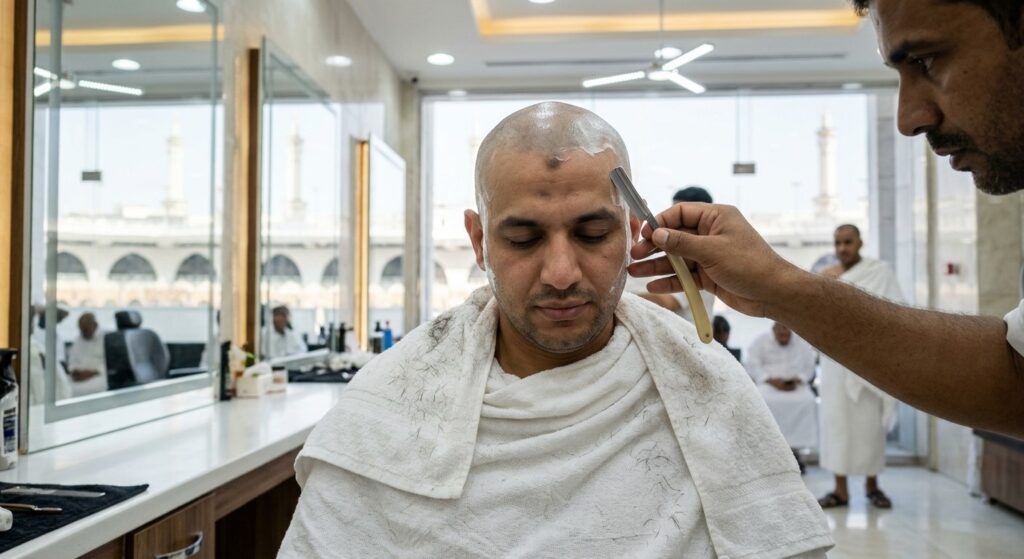
Step-by-Step Guide to Halq & Taqseer 1. Rulings on Halq and Taqseer Completing the haircut is the final compulsory ritual that exits a pilgrim from the sacred state of Ihram. For Male Pilgrims: Shaving the Head (Halq): Completely shaving the entire head is three times more virtuous than shortening/trimming the hair, as praised in the […]
24
Oct
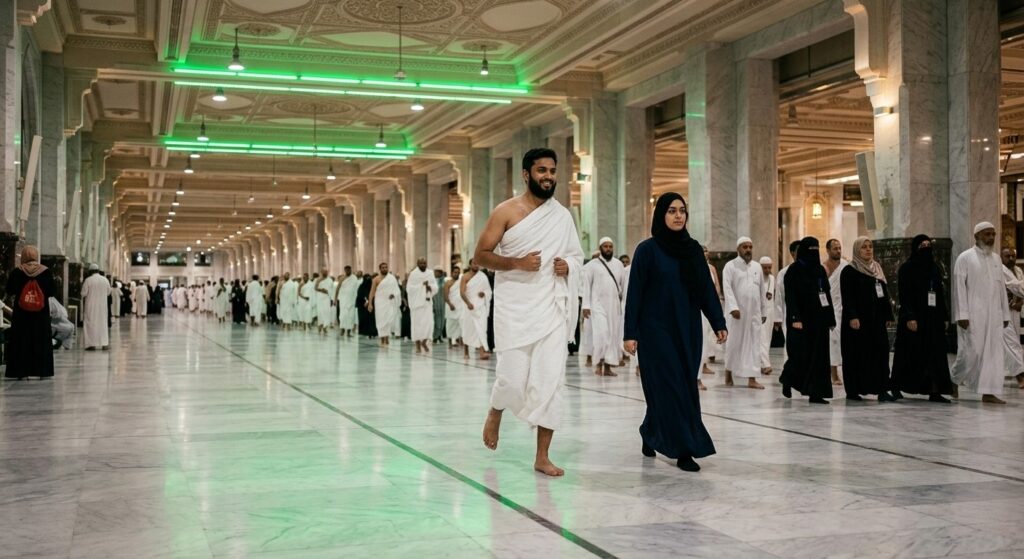
Safa & Marwah Sa‘i is the devotional ritual of walking between the hills of As-Safa and Al-Marwah as a prescribed act of worship during Hajj and Umrah. 1. Prerequisite Conditions for Sa‘i Intention (Niyyah): Having the sincere inner intention to perform Sa‘i for Allah. Prior Completion of Tawaf: Sa‘i must strictly be performed after completing […]
24
Oct
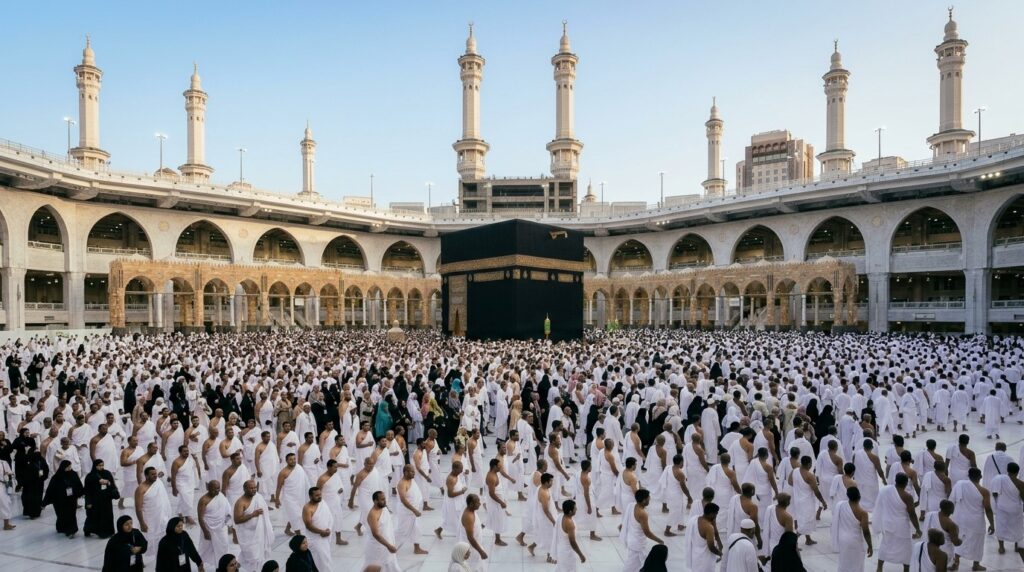
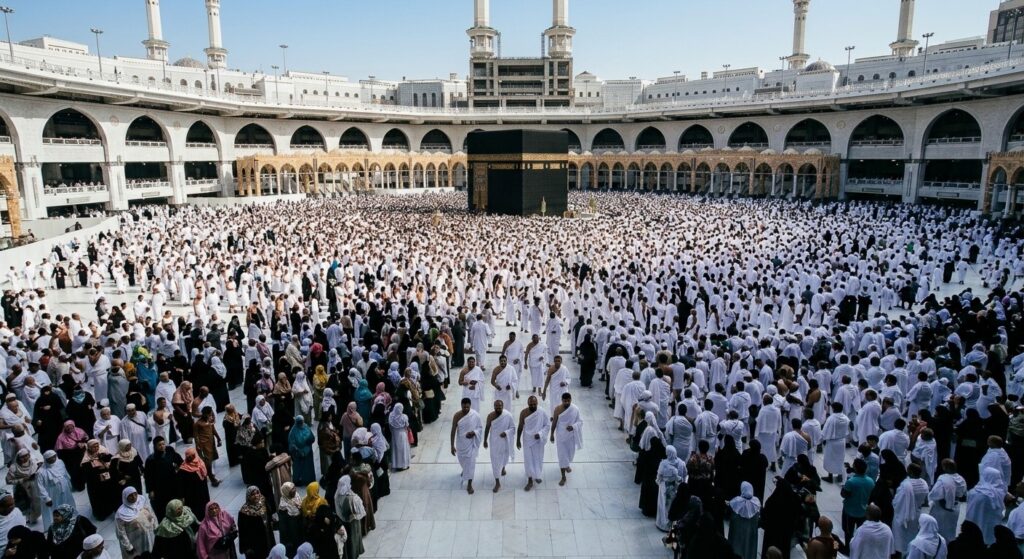
1. Rulings & Preparation for Tawaf Idtiba’ (Uncovering the Right Shoulder): Male pilgrims expose their right shoulder only during the execution of Tawaf. Immediately upon finishing all seven circuits, both shoulders must be covered again. Tawaf in Regular Attire: If a person is performing a voluntary (Nafl) Tawaf outside of Umrah or Hajj, they may […]
23
Oct
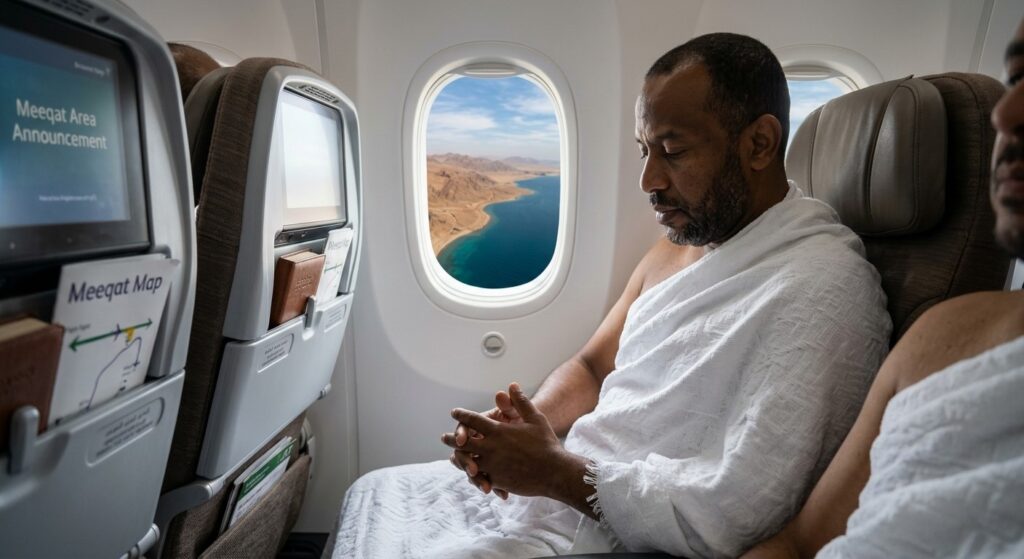
Attire, Talbiyah, Restrictions, and Common Errors 1. Dress Code for Ihram For Male Pilgrims: Consists of two unstitched white sheets/towels—one secured around the waist to cover the lower body (Izar) and the other draped over the shoulders (Rida). Footwear should leave the ankles and top part of the foot exposed (such as simple sandals). Idtiba’ […]
23
Oct
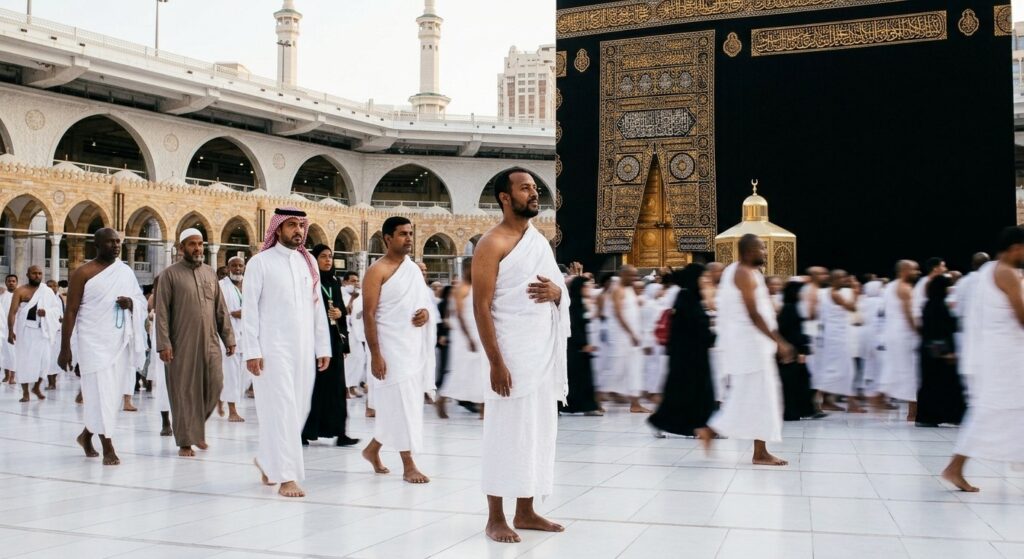
Temporal & Geographical Boundaries The Meeqat represents the designated boundaries (both in time and location) where pilgrims must enter the state of Ihram before proceeding to Makkah. 1. Temporal Meeqat (Time Boundaries) For Hajj: Prescribed during the specific Islamic months of Hajj (Shawwal, Dhul-Qa’dah, and the first ten days of Dhul-Hijjah). For Umrah: Permissible at […]
23
Oct
Definition of Umrah Linguistic Meaning: To visit or pay a visit. Islamic Technical Definition: Umrah is a dedicated act of worship performed to draw closer to Allah, consisting of entering the state of Ihram, performing Tawaf around the Holy Kaaba, undertaking Sa’ee between Mount Safa and Mount Marwa, and concluding with either shaving or shortening […]
19
Oct
The Age of Ignorance (Jahiliyyah) Long before the first revelation to Muhammad صلى الله عليه وسلم, people travelled to Makkah to honour the Ka‘bah. They performed pilgrimage, circled the sanctuary and preserved practices associated with Abraham عليه السلام. Yet the worship surrounding the Ka‘bah had become mixed with devotion to idols. The pilgrimage itself continued, […]