
Definition of Umrah
-
Linguistic Meaning: To visit or pay a visit.
-
Islamic Technical Definition: Umrah is a dedicated act of worship performed to draw closer to Allah, consisting of entering the state of Ihram, performing Tawaf around the Holy Kaaba, undertaking Sa’ee between Mount Safa and Mount Marwa, and concluding with either shaving or shortening the hair.
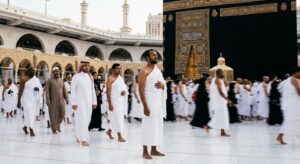
Islamic Ruling on Umrah
Performing Umrah is obligatory (Wajib/Fard) at least once in a lifetime for every eligible Muslim, as evidenced by the authentic narration:
Narrative by Aisha (R.A.): She asked, “O Messenger of Allah, is jihad obligatory upon women?”
The Prophet Muhammad ﷺ replied: “Yes, a jihad in which there is no fighting: Hajj and Umrah.”
— Sunan Ibn Majah (Hadith 2901)
Virtues and Excellence of Umrah
Umrah is often referred to as the Minor Pilgrimage and is a highly recommended Sunnah act that can be performed at any time throughout the year.
The Prophet Muhammad ﷺ said:
“An Umrah to another Umrah is an expiation for the sins committed between them.”
— Sahih al-Bukhari & Sahih Muslim
-
Key Takeaway: This Hadith highlights that Umrah is not intended to be a one-time event; rather, Muslims should strive to perform Umrah multiple times throughout their lives to continually seek forgiveness.
Essential Conditions for Umrah
For Umrah to be binding and valid, the following conditions must be met:
-
Islam: Being a Muslim.
-
Puberty (Balaghat): Reaching the age of maturity.
-
Sanity (Aql): Being of sound mind.
-
Freedom: Not being in a state of bondage/enslavement.
-
Capability (Istita’ah): Having both the physical health and financial means to undertake the journey.
-
Mahram Companion: A male guardian (Mahram) accompanying a female pilgrim (according to traditional rulings).
Pillars (Arkan) of Umrah
The core, indispensable rituals of Umrah are:
-
Ihram: The sincere intention (Niyyah) to enter the sacred state of Umrah.
-
Tawaf: Circumambulating the Kaaba seven times.
-
Sa’ee: Walking seven times between Mount Safa and Mount Marwa.
Important Rule: If any of these pillars are omitted, the pilgrim must return and complete them. Failure to do so renders the Umrah completely invalid, and no compensation can replace a missed pillar.
Obligations (Wajibhat) of Umrah
The essential duties of Umrah are:
-
Entering Ihram at the Meeqat: Assuming the state of Ihram from or before passing the designated boundary (Meeqat).
-
Hair Shortening or Shaving (Halq/Taqseer): Shaving or cutting the hair upon completing Sa’ee.
Important Rule: If an obligation is missed or performed incorrectly, a compensation (Fidyah) is required. This involves sacrificing a sheep (or 1/7 of a cow or camel) in Makkah and distributing its meat among the poor residents of the Haram.